Canola meal and soybean meal are the most commonly used amino acid sources in diets for growing pigs. However, through genetic selection, varieties of canola with greater concentrations of crude protein and reduced concentrations of fiber have been identified. Following oil extraction, the resulting high-protein canola meal contains 3 to 5 percent more crude protein than conventional canola meal. It is, therefore, expected that high-protein canola meal contains more digestible energy (DE) and metabolizable energy (ME) than conventional canola meal when fed to growing pigs. Therefore, experiment was conducted to test the hypothesis that DE and ME in high-protein canola meal is greater than in conventional canola meal.
Procedures
The main ingredients used in the current experiment were yellow dent corn, high-protein canola meal, conventional canola meal and soybean meal. The high-protein canola meal and the conventional canola meal were obtained from Corteva, Canada, and delivered to the University of Illinois, Urbana, IL, USA. Locally produced corn and soybean meal were sourced by the University of Illinois. A corn-based basal diet and three diets based on a mixture of corn and high-protein canola meal, conventional canola meal, or soybean meal were formulated. Thus, a total of four diets were used.
Thirty-two growing barrows with an average initial body weight of 66.44 ± 7.4 kg were used.
Pigs were allotted to dietary treatments using a randomized complete block design. There were two blocks of 16 pigs, with four pigs per diet in each block for a total of eight replicate pigs per diet. Pigs were housed in individual metabolism crates (0.81 m × 1.52 m) that were equipped with a self-feeder, a nipple waterer, a slatted floor, a screen floor, and a urine tray that allowed for the total, but separate, collection of urine and fecal materials from each pig. Throughout the experiment, pigs had free access to water. The daily feed allowance was calculated as 3.2 times the energy requirement for maintenance. Feed was provided daily in two equal meals that were provided at 0800 h and 1600 h.
Pigs were fed experimental diets for 12 days with feed disappearance being recorded daily. The initial five days were considered the adaptation period to the diet, whereas urine and fecal material were collected from feed provided during the following four days. Fecal samples and 10% of the collected urine were stored at -20°C immediately after collection.
Results
Diet analyses indicated that high-protein canola meal contained more protein and less fiber than conventional canola meal, and the concentration of indispensable AA was also greater in the high protein canola meal (Table 1).
Pigs remained healthy throughout the experiment and readily consumed their assigned diets. High-protein canola meal had greater (P < 0.05) apparent total tract digestibility of dry matter than conventional canola meal, indicating that the reduction in fiber concentration improved energy utilization in growing pigs (Table 2). Likewise, the ME in high protein canola mel was also greater (P < 0.05) than in conventional canola meal, and ME in high-protein canola meal was not different from ME in corn and soybean meal.
Conclusion
Results demonstrate that genetic improvement of canola has resulted in reduced fiber and increased protein in the meal that is produced after crushing. Therefore, meal from high-protein varieties of canola is greater than in meal from conventional sources of canola.
Appreciation
Funding for this research from Agrigenetics, Canada is greatly appreciated.
Table 1. Analyzed nutrient composition of feed ingredients, as-is basis
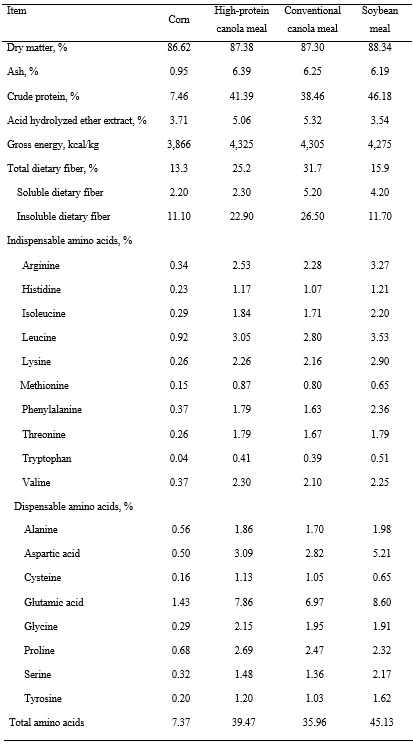
Table 2. Apparent total tract digestibility (ATTD) of dry matter and energy, and concentrations of digestible energy (DE) and metabolizable energy (ME) in experimental diets fed to growing pigs as-fed basis1
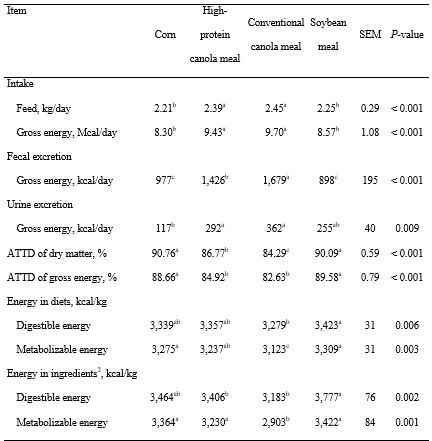
a-cWithin a row, means without a common superscript differ (P < 0.05).
1Data are least square means of eight observations for all treatments, except for the corn diet and the soybean meal diet (n = 7)
2Concentrations of DE and ME in corn were calculated by dividing DE and ME in the corn diet by 97.36%.