Soybean hulls (SBH) are a co-product of soybeans and provide a considerable amount of fiber, which helps with satiety and reduces stereotypic behaviors. The chemical composition of SBH is determined by the efficacy of the dehulling process, and the fiber in SBH may include varying levels of cellulose, hemicellulose, lignin, pectin, proteins and minor extractives. Dietary fiber is considered good for gestating sows, but it is not known if the use of soybean hulls as the main source of fiber will also result in greater performance of lactating sows. Therefore, the objective of this experiment was to test the hypothesis that addition of 8 or 16% soybean hulls to diets for lactating sows would improve reproductive performance and immunity of lactating sows compared with sows fed diets based on corn-soybean meal and no soybean hulls.
Animals, housing, feeding and sample collection
Three experimental diets were prepared to meet the requirements for amino acids and other nutrients by lactating sows (NRC, 2012). One diet contained a mix of soybean meal and corn, and two diets contained corn, soybean meal and 8% or 16% SBH.
A total of 108 Camborough gilts and sows with initial body weight of 205.69 ± 24.06 were used. Animals were allotted to the three experimental diets in a randomized complete block design using breeding group as the block. There were six blocks of 18 sows with six sows per treatment in each block. Sows were moved to the lactation barn on d 106 of gestation and feeding of experimental diets was initiated that day. Feed allowance for the remainder of the gestation period was 1.5 times the maintenance energy requirement of sows (i.e., 100 kcal metabolizable energy/kg body weight0.75; NRC, 2012). However, during lactation, sows were allowed at libitum intake of feed and water was available at all times.
Sow body weights were determined on day 106 of gestation, within 24 h after farrowing and at weaning. Rectal temperature of each sow was recorded at farrowing and after 24 hours. The number and individual weights of live-born pigs, the number of stillborn, mummified, and total pigs per litter after cross-fostering were recorded within 24 hours of farrowing, and pigs were weighed again at weaning. Milk samples were collected from 18 randomly selected sows per treatment on day 19 of lactation, and blood samples were also collected from those 18 sows and from one barrow per litter at the day of weaning.
Results
There were no differences among dietary treatments in temperature of the sows at 24 hours after farrowing (Table 1). The total number of pigs born per litter, number of pigs born alive per litter, number of mummified pigs per litter, and the number of pigs weaned per litter were not affected by treatment. Total litter weight at birth and litter weight at weaning were also not affected by diet.
Milk composition and IgG in milk were not affected by dietary treatment. Serum cytokines and IgG in sows did not differ among dietary treatments. However, IL-10 of pigs from sows fed the diet containing 8% SBH, had a tendency to be greater (P < 0.10) compared with pigs from sows fed a diet with 0% or 16% SBH. Likewise, TNF-α in pigs from sows fed the diet containing 8% SBH was greater (P < 0.05) than in pigs from sows fed the diet without SBH. However, no differences were observed in IgG or the other cytokines in pigs.
Key points
- Growth performance of litters and composition of milk were not affected by the diet.
- Some serum immune characteristics were reduced in pigs from sows fed SBH.
Table 1. Reproductive performance, milk composition, and blood immune characteristics of lactating sows and pigs1
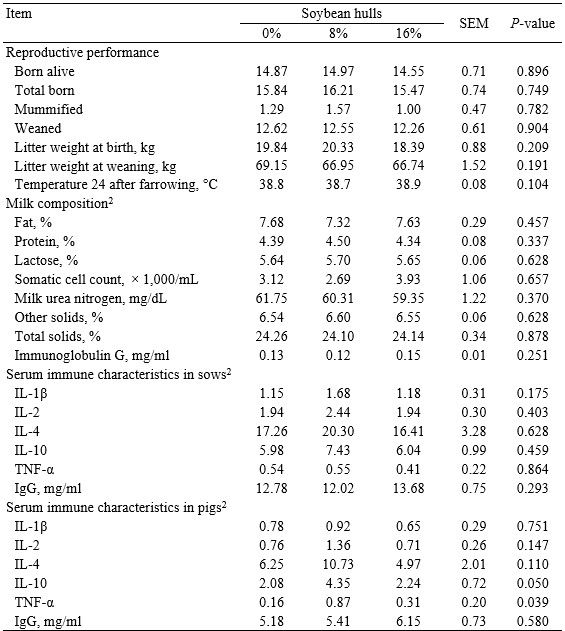
1Data are least squares means of 35 observations, except for the treatment containing 0% soybean hulls (n = 34) and the treatment containing 8% soybean hulls (n = 33).
2Data are least squares means of 18 observations except for the treatment with 0% soybean hulls (n = 17) and the treatment with 16% soybean hulls (n = 17).